|
Sheila Matano, MPH, CPH
, Director of QuitNow BC
, leads a free province‑wide service that has supported British Columbians in quitting or reducing commercial tobacco and nicotine use for more than 20 years. Funded by the BC Ministry of Health
and delivered by the BC Lung Foundation
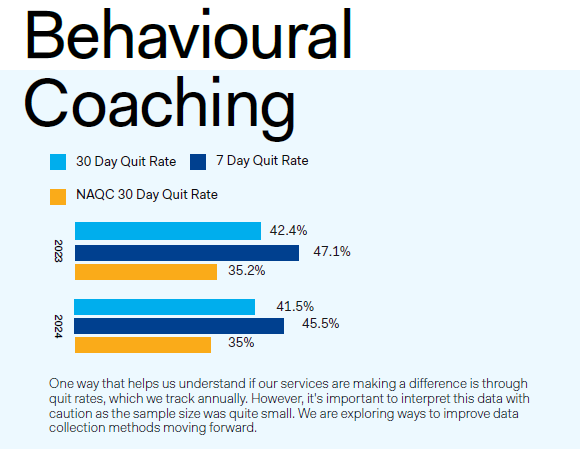
, QuitNow BC serves 5,000–7,000 participants annually through behavioral coaching and digital services, with a 30‑day quit rate of 42% among coaching clients. These outcomes reflect the ongoing focus on
pairing evidence-based approaches with responsive, user-centered design.
Under Sheila’s leadership, the program has streamlined intake, strengthened an empathetic, non‑judgmental
Behavioural Coaching approach (achieving 95% participant satisfaction), and expanded multilingual access—
Live Chat
is now available in more than 100 languages. Clients can choose from multiple support options, including phone coaching, chat, text and email tips, a highly engaged online community forum, monthly group
sessions, and youth‑focused resources such as a vaping prevention and cessation mini‑site. QuitNow BC recognizes that preferences vary; many younger clients gravitate toward digital tools for their flexibility,
while others continue to value the connection of phone-based coaching. Offering multiple pathways so people can engage in ways that feel accessible and sustainable is core to modern quitline design.
To better support youth, QuitNow BC launched a
Youth Mini-Site with personalized, relatable content focused on vaping prevention and cessation. Additionally, the
community forum continues to be a highly engaged space where clients share strategies and celebrate milestones. Complementing the online forum are
Text Tips and
Email Tips programs which deliver tailored daily support, as well as the
QuitWeek
contest which brought in over 1,000 new registrations in 2025. Monthly group sessions
offer additional interactive, webinar-style support.
QuitNow BC also strengthened provider engagement through quarterly
client
and provider
newsletters and the launch of a referral portal
, making it easier to connect clients to services and access training
and resources, including printed materials
, digital resources
, and
educational webinars.
These efforts resulted in 96% of providers rating their QuitNow BC training experience as good or very good.
This past year, the outreach strategy focused more strongly on priority populations and included tailored resources for groups including
women,
people in trades,
Indigenous communities,
2SLGBTQIA+ individuals, and those navigating
mental wellbeing. QuitNow BC also expanded content addressing the
intersection of radon and smoking.
This work continues to reinforce the importance of culturally relevant, tailored approaches in reaching diverse populations.
Marketing and communications efforts continue to build awareness and engagement across British Columbia. Through a diverse mix of platforms, including
Facebook,
Instagram,
TikTok, and
Pinterest,
QuitNow BC continues to expand its reach and strengthen its digital presence, averaging approximately 4 million
impressions per quarter.
Looking ahead, QuitNow BC remains focused on expanding access, deepening engagement, and strengthening integration with the broader healthcare system,
while continuing to develop new resources, including the
Annual Report, and designing services that are responsive, inclusive, and grounded in the realities of the people they serve.
|

 Email to a Friend