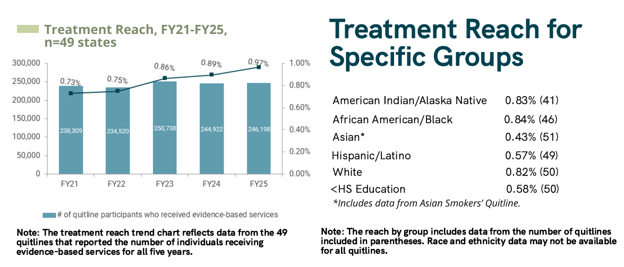
Dear NAQC Community, This Friday, we commemorate Juneteenth, the day enslaved African Americans in Galveston, Texas, learned of their freedom and began a new journey toward justice and opportunity. Juneteenth stands as a testament to resilience, triumph, and the ongoing fight to overcome systemic disparities. This Friday, we commemorate Juneteenth, the day enslaved African Americans in Galveston, Texas, learned of their freedom and began a new journey toward justice and opportunity. Juneteenth stands as a testament to resilience, triumph, and the ongoing fight to overcome systemic disparities. Reducing commercial tobacco use has been a public health success, yet disparities continue to affect historically marginalized communities. Despite decades of progress, commercial tobacco use remains the leading cause of preventable death in the U.S., driven by targeted industry marketing, social and economic injustice, and limited access to healthcare. Commercial tobacco use is not simply a matter of personal choice; it is deeply shaped by environmental and societal conditions. Recent NAQC data provide a more nuanced picture among Black adults. Many states have expanded culturally responsive outreach, and most quitlines now have protocols to support people who use menthol products, which are disproportionately used by Black adults who smoke. Yet the number of Black adults served by quitlines has declined over the past four years: across 48 states with demographic data, 35,981 Black adults were served in FY25, compared with 37,080 in FY24 and just over 36,000 in both FY23 and FY22, and Black adults now represent a slightly smaller share of overall quitline participants. Taken together, these data show both progress and persistent gaps. Quitlines have made important advances to better serve Black adults, yet participation is not increasing and remains disproportionate to need. These trends underscore the urgency of strengthening commitments and intensifying efforts to reduce commercial tobacco–related harm in Black communities and other populations experiencing inequities. In FY25, quitlines reached fewer than 1% of adults in any racial or ethnic group, including 0.84% of African American/Black adults and 0.82% of White adults in reporting states. This narrow band of reach across groups, combined with the higher commercial tobacco burden in Black communities, highlights the need for targeted strategies that both expand overall reach and explicitly address inequities in access and engagement. | 
 Email to a Friend