Sustaining Quitline Referrals Through County Partnerships: Arizona’s Health Systems Change Model
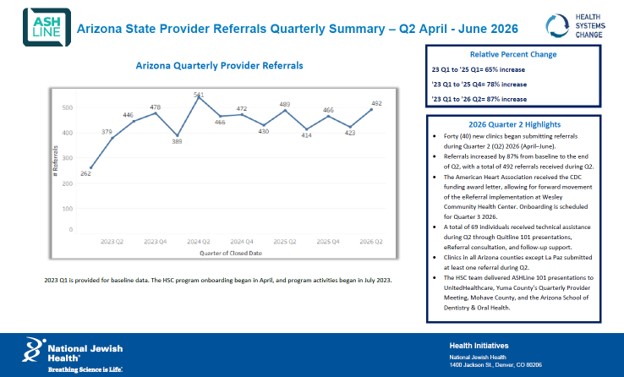
Arizona’s Health Systems Change model helps healthcare organizations integrate tobacco treatment into routine care and strengthen referrals to the ASHLine. The program combines statewide coordination with county-level engagement to support clinics across Arizona. County health departments play a key role as local champions, using trusted relationships, community knowledge, and in-person support to reinforce statewide outreach. The Arizona Department of Health Services and National Jewish Health, Arizona’s quitline provider, support county partners with onboarding, training, consultation, referral feedback, and shared learning. The model is designed not just to establish referrals, but to sustain them over time. County partners help clinics troubleshoot workflow barriers, answer questions, provide refresher training, and monitor clinic-specific referral data to identify declines in activity and target follow-up support. When more complex issues arise, county partners can consult with the National Jewish Health Health Systems Change team for technical assistance and resources. Arizona’s experience shows that local relationships are essential, but sustaining referrals also depends on centralized coordination, actionable data, continuity through staff turnover, and ongoing follow-up. This approach is helping Arizona build durable partnerships with healthcare organizations and expand referral activity. From January through June 2026, 167 unique organizations submitted 916 referrals statewide, and in June alone, 59 organizations submitted referrals, including 14 that had not sent a referral in the previous five months. Between Q1 (January - March) 2023, before this program began in July 2023, and Q2 (April - June) 2026, there has been an 87% increase in provider referrals (report is provided below). | 
 Email to a Friend